Can You Paint a Metal Roof? What Missouri Owners Should Know First
Category
Yes, you can paint a metal roof, but on most roofs a purpose-made elastomeric roof coating will outlast ordinary paint by a wide margin. Either way, the job lives or dies on prep: removing loose rust, fixing loose fasteners and sealing seams. On homes, barns and shops around Wentzville and Wildwood, that prep is most of the work.
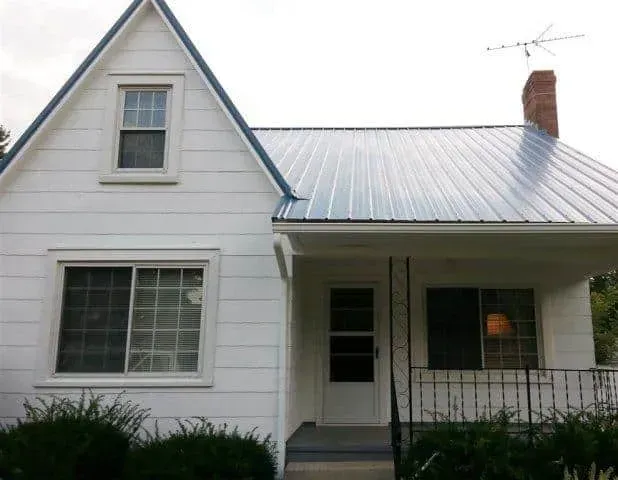
Metal roofs are everywhere in our part of Missouri. Pole barns out past Wentzville, workshops in Wildwood, porch roofs on older farmhouses, standing-seam roofs on newer homes. Plenty of them are 20 or 30 years old now, faded, chalky and starting to show rust at the screws. Here's what to know before you buy metal roof paint.
Is it better to paint a metal roof or coat it?
For most roofs, coat it. Exterior metal paint is a thin decorative film. A roof coating goes on much thicker, stays flexible and is designed to bridge seams and seal around fastener heads, which is where metal roofs actually leak.
Metal moves a lot. A panel that's been baking in late-July sun can cool fast when an afternoon thunderstorm rolls through, and it goes through the same stretching and shrinking all winter as temperatures swing above and below freezing. A thin, stiff paint film tends to crack at laps and around screws under that kind of movement. An elastomeric coating stretches and recovers.
| Factor | Exterior metal paint | Elastomeric roof coating |
|---|---|---|
| Film build | Thin | Much thicker, applied in multiple coats |
| Flexibility | Limited; can crack with thermal movement | Stretches and recovers as metal expands and contracts |
| Seams and fasteners | Colored, not sealed | Bridged, usually with seam treatment underneath |
| Waterproofing | Minimal | Forms a continuous membrane |
| Heat | Depends on color | White options reflect much of the sun |
| Good fit for | A small shed or a color refresh on a tight roof | Roofs with leaks at seams, rust at screws or heat problems |
Paint isn't wrong for every roof. A small, tight shed roof that just looks tired can be painted with a direct-to-metal product and look fine for years. But if the goal is stopping leaks and buying real time before replacement, you want a coating system.
What has to happen before a metal roof can be coated?
Clean it, fix it, then coat it. Skip any of those and the coating won't bond to the metal, no matter how good the product is.
- Inspect top and bottom. Look for rust-through, loose or lifted panels, and water stains on the framing or ceiling below.
- Wash thoroughly. Dirt, oil, bird droppings and chalky old paint all have to come off.
- Remove rust. Loose rust and scale get brushed or ground back to sound metal.
- Fix fasteners. Backed-out screws get tightened or replaced, and worn washers get swapped. Holes that have wallowed out may need a larger screw.
- Seal seams and penetrations. Laps, ridge caps, vent pipes and curbs get seam sealer or reinforcing fabric set in a base coat.
- Apply the coating in multiple coats to the manufacturer's specified thickness.
Why do fasteners and seams cause most metal roof leaks?
Because an exposed-fastener metal roof has hundreds or thousands of holes in it, each one sealed by a small rubber washer. After years of sun, those washers dry out, crack and stop sealing.
Thermal movement makes it worse. Every hot day and cold night works the screws a little, and over time some back out. Water then runs down the screw shank into the framing. Seams are the other weak point. Wind-driven rain gets pushed sideways into panel laps, and capillary action pulls it further in than you'd expect.
Standing-seam roofs with hidden clips have fewer of these issues, though their seams, ends and flashings still need a careful look. The screw-down panels common on barns, pole buildings and older porch roofs are where a coating system earns its keep, because it covers every fastener head and lap in one continuous layer.
How do you deal with rust on a metal roof?
Surface rust is normal and treatable. Rust that has eaten through the panel is a different problem, and no coating fixes a hole.
Rust usually starts at cut edges, around fasteners and anywhere water sits, like the low end of a panel or behind a ridge cap. If it's surface rust or light scale, it gets cleaned back to sound metal. If you can push a screwdriver through it, that section of metal needs a patch or a new panel before coating.
Professional crews don't eyeball this. The Association for Materials Protection and Performance (AMPP) publishes the surface-preparation and corrosion-control standards the coatings industry works from, including how clean a rusted steel surface has to be before it's coated. Ask any contractor which prep standard they're working to on your roof.
Missouri humidity and long wet spells give rust plenty of chances, which is one reason we don't recommend letting a faded roof go another five years. The longer the bare metal sits exposed, the more of it you end up replacing. If you also have metal walls on a shop or outbuilding, our page on metal building coatings covers the wall side of the job.
When is replacing a metal roof the better call?
When the metal itself is gone. A coating protects and seals sound panels; it doesn't restore structure.
- Rust-through is widespread rather than in a few spots
- The purlins, deck or framing underneath are rotted or sagging
- Panels are badly deformed and won't lie flat or drain
- Patching would cost close to what new panels would
We'd rather tell you that up front than coat a roof that won't hold up. Rhino Shield of Missouri installs Super Shield coatings for sloped roofs, including metal, and part of every estimate is an honest call on whether your roof is a coating candidate at all. Super Shield roof coatings carry a 10–15 year warranty.
The standard we hold the roof to is the same one homeowners hold us to on their walls. One customer said it this way about the coating on his house:
"I am very happy I decided to go with Rhino Shield for painting the exterior of my house. The product looks as great as it performs."
— Brian K.
That review is about his home's exterior walls, not a roof. Looking good and performing well should go together up top too, and that's what the prep steps above are for. You can see the flat, sloped and white options side by side on our Super Shield roof coating page.
Frequently Asked Questions
Can you paint over a rusty metal roof?
Not directly. Loose rust and scale have to be brushed or ground off first, back to sound metal. Paint or coating applied over loose rust will flake off with it. Panels with rust-through need patching or replacement before any coating goes on.
How long does paint last on a metal roof compared to a coating?
It varies with the product, the prep and how much sun the roof takes. Ordinary paint is a thin film and generally needs redoing sooner, especially at seams and screws. Super Shield roof coatings from Rhino Shield of Missouri carry a 10–15 year warranty.
What prep does a metal roof need before coating?
A thorough wash, loose rust and scale removed back to sound metal, fasteners tightened or replaced, and seams sealed. Your contractor should spell out each of those steps in writing.
Will a coating stop my metal roof from leaking?
It will if the leaks are coming from fasteners, seams and small openings, and those spots are repaired and reinforced before coating. It won't fix leaks caused by rotted framing, rust-through or panels that hold water. A good inspection tells you which kind of leak you have.
Get an Honest Look at Your Metal Roof
Whether it's a barn, a shop or the roof over your porch, we'll check the rust, screws and seams and tell you whether coating makes sense or replacement is the smarter spend. Request a free estimate or call 314-239-7947.