Commercial Building Exterior Facelift: 8 Upgrades That Make an Older Building Look New
Category
A commercial building exterior facelift usually comes down to eight upgrades: masonry and caulk repair, a long-life wall coating, trim and canopy refinishing, new signage, better lighting, a cleaned-up entry and landscaping, a roof coating, and working gutters. Do the repairs first. Coating the walls gives the biggest visual change, but it's one piece of the job.
Owners in St. Louis and Kirkwood see the same pattern on older buildings. The bones are fine. The brick is stained, the caulk has shrunk away from the windows, the canopy has faded to a color nobody picked, and the sign still lists a phone number from two tenants ago. None of that is structural. All of it tells people driving by that nobody's paying attention.
Where should a commercial building exterior facelift start?
Start with a walk-around and a written list, not a color chart. You want to know what's failing before you decide what to make prettier.
Walk every elevation at two times of day. Morning light shows staining and efflorescence on masonry. Late afternoon shows how faded the south and west walls really are compared with the north side. Note anything that lets water in, because water damage is the thing that turns a cosmetic budget into a repair budget.
The 8 upgrades that make an older commercial building look new
Here they are in the order we'd tackle them. Order matters, because you don't want a lift crew refinishing canopies after the wall coating is down, and you don't want new lighting installed on a wall that still needs tuckpointing.
1. Clean and repair masonry, then re-caulk
Wash the walls, repoint failed mortar joints, patch spalled brick or block, and replace dried-out sealant at windows, doors, and expansion joints. This step looks like nothing on its own. It's also what decides whether everything after it lasts. Missouri's freeze-thaw cycles push water into every open joint each winter, and coatings can't bridge a crack that's still moving because the mortar behind it is gone. Our page on coating older brick exteriors covers what that prep looks like on St. Louis masonry.
2. Coat the walls, with a color strategy
The walls are most of what people see, so this is where the "it looks new" reaction comes from. Pick colors for the long haul: a body color that won't look dated in ten years, a contrast color for trim and accents, and one brand color used sparingly at the entry. Faded buildings tend to look worse than they are because the color has gone flat, not because anything is falling apart.
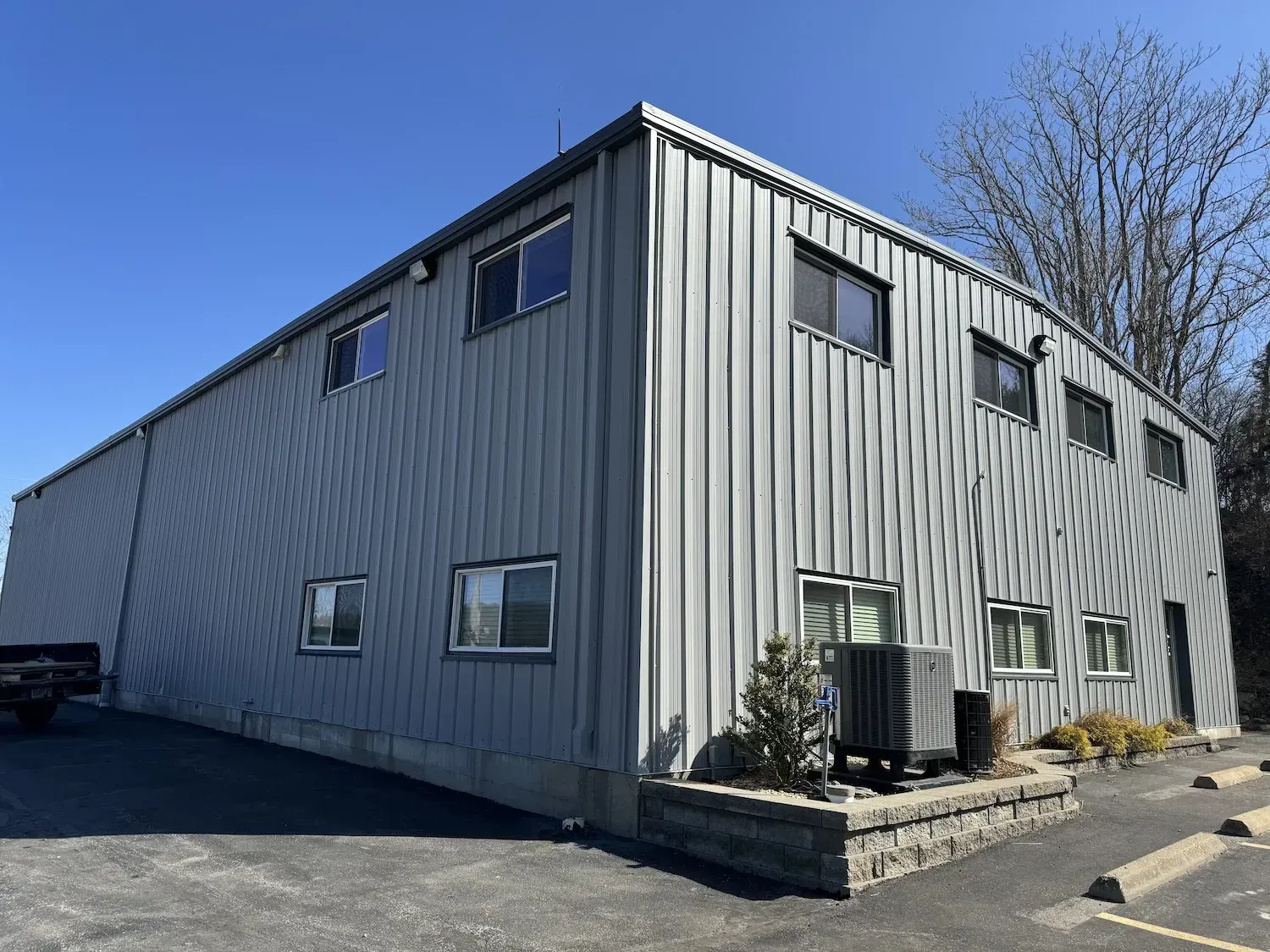
Conventional exterior paint goes on at roughly 1 to 2 mils and usually needs redoing every 5 to 7 years. A ceramic elastomeric coating like Rhino Shield goes on at 8 to 10 mils through a multi-step system (wash, repairs, caulk, primer, then a two-part topcoat application) and carries a 25-year transferable warranty. Rhino Shield of Missouri has coated brick, block, stucco, metal, and tilt-up buildings across the metro, and the walkthrough on our commercial exterior painters page shows how a building project runs.
3. Refresh trim, canopies, and doors
Metal coping, door frames, steel doors, and fabric or metal canopies age faster than the walls. Recoat or replace them in the same project so the building reads as finished. A crisp door frame does more for an entry than people expect.
4. Update the signage
Old signs date a building fast. Replace faded panels, remove dead brackets and conduit from past tenants, and patch the holes before the walls get coated. Most St. Louis County municipalities require a sign permit, so check with your city before ordering anything.
5. Fix the lighting
Swap yellowed fixtures for LED wall packs and add light at the entry and the sign. A building that looks dark at 5 p.m. in December looks closed. Lighting also shows off the new wall color after dark, which is when a lot of commuters see your property.
6. Clean up the entry and landscaping
Trim back overgrown shrubs so they stop holding moisture against the walls, replace dead plantings, power wash the walkway, and fix cracked or heaved concrete at the door. Cheap. Fast. Very visible.
7. Coat the roof if it's still sound
If you have a low-slope or metal roof that's in fair shape, a reflective roof coating can extend its life and cut summer heat on the top floor. It won't save a roof that's saturated or failing. Our Super Shield roof coatings carry a 10–15 year warranty, and an inspection tells you whether your roof is a candidate.
8. Repair gutters and downspouts
Rehang sagging gutters, reseal leaking seams, and extend downspouts away from the foundation. Overflowing gutters are the most common reason we see streaked, stained walls on otherwise healthy buildings. Doing this last protects the work you just paid for.
How much of a commercial building exterior renovation is the coating?
It's usually the biggest single line item and the biggest visual change, but it isn't the whole facelift. Signage, lighting, and site work often belong to other trades, and that's fine.
What we'd tell any owner: sequence the trades so the wall coating happens after masonry repair and sign removal, and before new fixtures go up. That way nobody's drilling through a fresh coating six weeks after it's applied. For a broader look at how owners plan this kind of work, Facilitiesnet has a good library on exterior maintenance and building envelope planning.
One owner put the result simply after we coated a building that had been around for decades:
"They made our 53 year old building look new again. Worth every penny. The staff is top notch. They have fantastic customer service and work ethic."
— Mike S.
That's the goal of a facelift. Not a new building, just one people notice again, and one that keeps looking that way for years instead of fading back by the next lease renewal.
Frequently Asked Questions
What is a commercial building exterior facelift?
It's a set of cosmetic and protective upgrades that make an older building look current without rebuilding it. Typical items are masonry and caulk repair, a new wall coating, refreshed trim and canopies, signage, lighting, entry and landscaping work, roof coating, and gutter repair. The structure stays the same.
What should I fix first on an older commercial building?
Fix anything that lets water in. That means failed mortar joints, cracked sealant, leaking gutters, and roof issues. Cosmetic upgrades applied over active moisture problems won't last, so repairs come before coatings, signage, or lighting.
How long does a coating on a commercial building exterior last?
Conventional exterior paint typically lasts 5 to 7 years before it needs redoing. Rhino Shield's ceramic elastomeric coating is applied 8 to 10 mils thick and carries a 25-year transferable warranty on walls. Roof coatings are a separate system with a 10–15 year warranty.
Can you coat a commercial building while tenants stay open?
In most cases, yes. Crews work elevation by elevation, keep entrances usable, and schedule work around access needs. Your estimator should walk through staging, lift placement, and parking impacts before the project starts.
Ready to plan your building's facelift?
We'll walk your building, tell you what needs repair before anything gets coated, and give you a written scope. Request a free on-site estimate or call us at (314) 239-7947.
Commercial Exterior Painting in St. Louis: What the Process Looks Like From Bid to Final Walkthrough